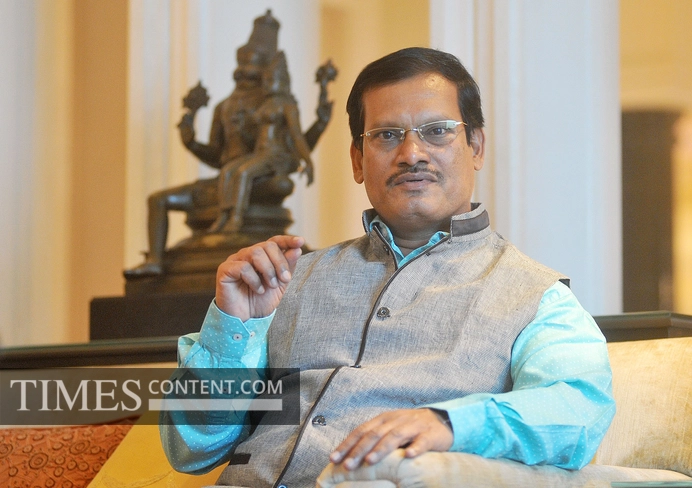
Arunachalam Muruganantham, known as India’s ‘PadMan’, stands as one of India’s most inspirational social entrepreneurs, and is celebrated globally for his relentless pursuit to eradicate menstrual taboos and improve women’s health through affordable sanitary products. His journey was a struggle – from living in poverty after losing his father, dropping out of school, to various ideas on how to make cost-effective pads for women; he is truly a person of inspiration.
Arunachalam Muruganantham was born in 1961 in a Tamil family of handloom weavers in Coimbatore, Tamil Nadu, India. After losing his father in an accident, he was brought up impoverished by his mother, who frantically worked as a farm laborer to support her family and his education. At 14, he left school to help contribute income by doing odd jobs as a farmworker, welder, machine tool operator, and many others. In 1998, he wed Shanthi, and during their second week of marriage, Shanthi’s struggle of utilizing old rags during her menstrual cycle motivated him to begin a journey of being an inventor and social entrepreneur. Mr. Muruganantham experienced public ridicule in his endeavor, eventually culminating in a separation from his wife and family, all in the pursuit of creating an affordable sanitary pad option for women.
The real breakthrough for Arunachalam Muruganantham was a simple, low-cost machine that produced sanitary pads at a diminished value than you would find at the store. After years of studying and taking part in paid commercial sanitary pad products, he was able to figure out that the most important raw material making the sanitary pads was cellulose wood pulp, which can be processed without expensive industrial machines. Using that knowledge, he adjusted a machine to shred, compress, and sterilize pulp and package it into pads. What makes it remarkable is not only how cheap it was, but this was also an accessible technology – women could operate the machine, often with limited mechanical ability, produce pads of consistent quality and sell them as a business. This innovation not only made sanitary hygiene products available to millions of people, but it also helped to create new jobs and opportunities for women to start businesses.
Muruganantham’s inventive endeavor has achieved remarkable social transformation; it has resulted in:
– Women’s access to hygienic and affordable sanitary napkin options to minimize
their risk for infections and health complications.
– Women’s opportunity for sustainable employment, dignity, and freedom during
their menstruation.
– Increased awareness of menstruation hygiene awareness, and dismantling of
centuries-old societal taboos and myths.
The Padman Effect attracted the production of the 2013 documentary Menstrual Man and the
The 2018 film Pad Man, starring Akshay Kumar. In 2014, his name was included in Time’s 100 Most Influential People. He also received the Padma Shri from the Government of India in 2016 for his contributions.
Arunachalam Muruganantham is a powerful illustration of how one individual can change the world with resolve and compassion. His story demonstrates the essential nature of courage as real innovation is not only about ‘technology’, but about readiness to tackle economic hardship, scorn, or even separation from his family to provide a solution for a concern that was embarrassing for many. Muruganthan opted to ensure a provincially manufactured, low-cost sanitary pad machine was available to rural women rather than companies, and he began a global movement for women’s health, dignity and opportunity from what started as merely some concern for his wife and mother. In conclusion, Muruganthan’s legacy is not limited to the low-cost pads he created, but it also includes the millions of girls and women who can study, work, and otherwise live with confidence and dignity because one man’s perseverance could not be denied.
 Unscripted Adventures
Leave a comment